California NEMT Insurance Requirements
Keep California enrollment paperwork, operating authority and buyer insurance requirements in the right order. Casurance helps you compare the documents and coverage needed for the NEMT service your business actually performs.
Prepare your California insurance documentation
Whether you own one wheelchair van, manage a small gurney fleet or operate a large California paratransit company, submit the real vehicle schedule and service description. New units and new contracts should trigger a fresh document check.
Check My California Requirements · 1-888-254-0089
Two-step request: save business and contact details, then add operations, coverages, vehicles, drivers and documents.
Medi-Cal enrollment and transportation authority
DHCS uses PAVE for transportation-provider applications and specified enrollment changes. Source: DHCS medical transportation provider application information. Separately identify any CPUC, DMV, CHP or local requirements that apply to your vehicle and service classification. Do not assume a Motor Carrier Permit or TCP permit is universally required simply because the business transports patients. Obtain the responsible authority’s determination for the actual operation.
Commercial auto limits: use the applicable requirement
A $1 million combined single limit is a contract example often discussed in NEMT submissions, not a blanket California rule stated here. Seating, vehicle classification, authority and the insurance exhibit can affect the required amount. Send the governing documents so Casurance can compare the requested auto limit and any necessary filings with available coverage.
General liability and the rest of the insurance exhibit
An exhibit may request a $1 million occurrence/$2 million aggregate GL structure, professional liability, SAM and umbrella or excess coverage. Treat each as a separate request to verify. A DHCS enrollment insurance item should not be substituted for the auto, GL or excess limit demanded by a hospital or broker. Record occurrence limits, aggregates, sublimits and whether defense costs affect available protection.
California employee coverage
California employers with one or more employees must satisfy workers’ compensation requirements under Labor Code section 3700. Source: California DWC employer FAQs. Describe drivers, aides, dispatchers and office staff, and review owner inclusion or exclusion based on the business structure. Calling a worker a contractor does not by itself resolve employment status or a contract’s insurance requirements.
Vehicles, inspections and driver records
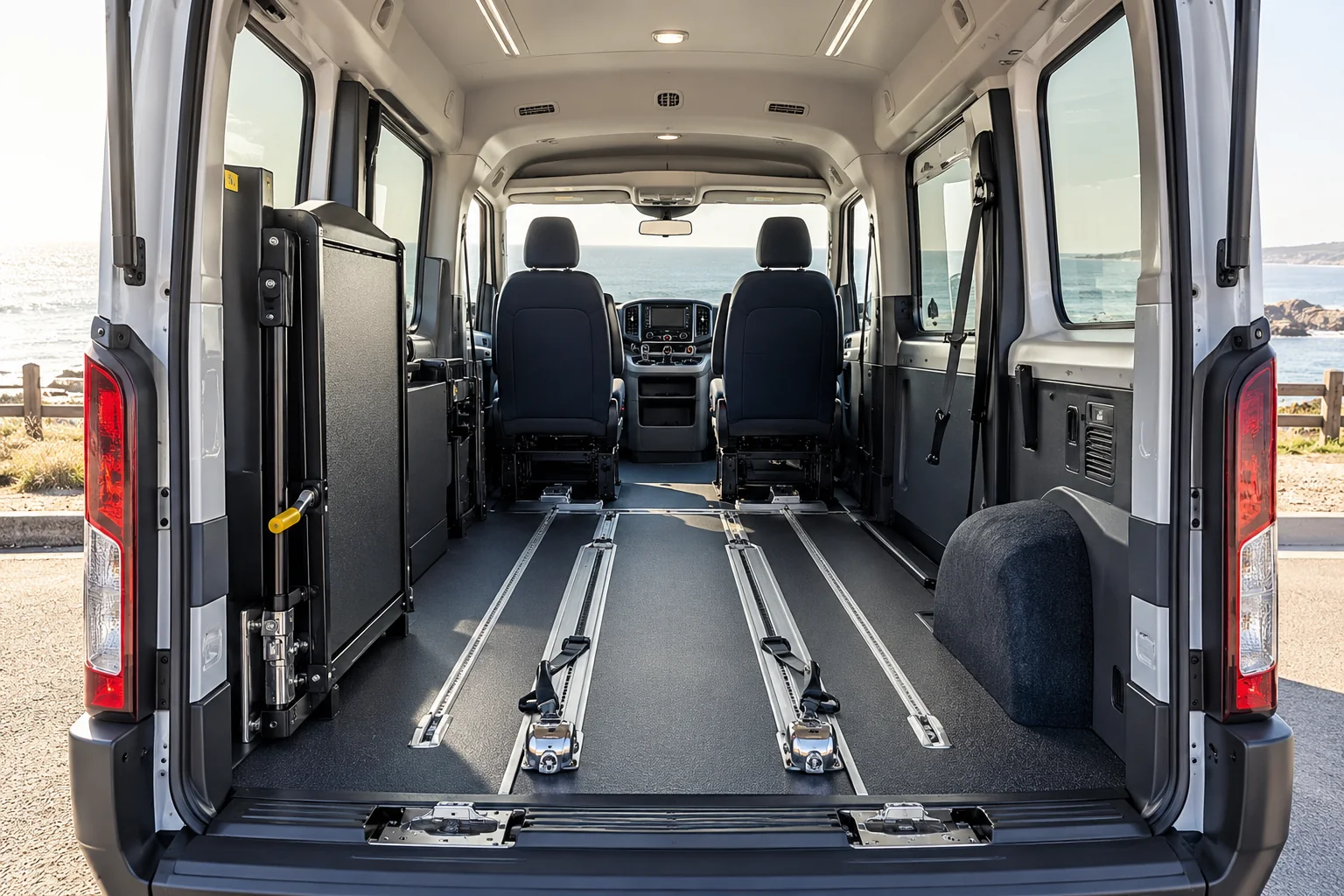
Collect commercial registration, insurance evidence, vehicle and driver credentials, and applicable inspection or special-permit records. Source: DHCS transportation provider application guidance. Keep wheelchair lifts, ramps, restraint systems and stretcher equipment documented, including training and maintenance. Ask which requirements apply to the vehicle class instead of copying a single checklist across ambulatory, wheelchair and litter services.
SAM, patient assistance and hired vehicles
Explain passenger populations and assistance duties when requesting sexual abuse and molestation and professional liability options. These coverages are not automatically included with auto. Identify rented replacement vans, employee-owned vehicles and any subcontracted trips when discussing hired/non-owned liability. Confirm physical damage for rentals separately and ask how covered loading or unloading allegations are treated.
Broker-specific certificate review
Submit current MTM Health, Modivcare, Verida, SafeRide Health, managed-care, hospital or agency instructions for your program. Use the buyer’s correct legal entity, certificate holder, additional-insured wording and any waiver or primary/noncontributory request. Older LogistiCare or Veyo references should be clarified with the contract administrator. A certificate reports bound insurance and cannot grant rights absent from the policy.
California location examples
Illustrative situations: a San Jose operator needs clearance procedures for high-roof vans at medical offices; a Long Beach discharge provider needs a defined curbside handoff; a Bakersfield fleet should explain its real rural radius and replacement-vehicle arrangements. A Sacramento parking yard with several converted vans creates a separate property concentration. These examples are underwriting prompts, not new city-specific legal minimums.
Protect the operation beyond credentialing
Review vehicle physical damage and conversion values, uninsured/underinsured motorists and available medical payments, plus property, equipment, cyber and crime. A contract’s minimum checklist may omit losses that could still interrupt your business. Casurance can compare the required lines with additional protection you want for your facilities, dispatch systems and fleet assets.
California submission checklist
Bring the legal name, addresses, enrollment and authority documents, current policies, loss runs, vehicle and driver schedules, payroll and insurance exhibits. Identify planned start dates and proposed units. Use the two-step request to save the business details and attach the supporting file. An agent can review insurance options and evidence requirements while the relevant program or regulator handles licensing and enrollment decisions.

Questions about prepare your california insurance documentation
Does a California certificate prove I am enrolled in Medi-Cal?
No. Insurance evidence and provider enrollment are separate. Keep both current and verify that the enrolled services and vehicles match the work you accept.
Can Casurance review additional-insured requests from a hospital?
Yes. Supply the contract wording and legal entity. The requested endorsement must be available and approved; the certificate alone cannot create the coverage.
Do owner-operators have the same workers’ compensation situation as employers?
The business structure, actual workforce and owner elections matter. Explain them to the agent and review any buyer requirement rather than assuming an owner-only business follows an employee rule.